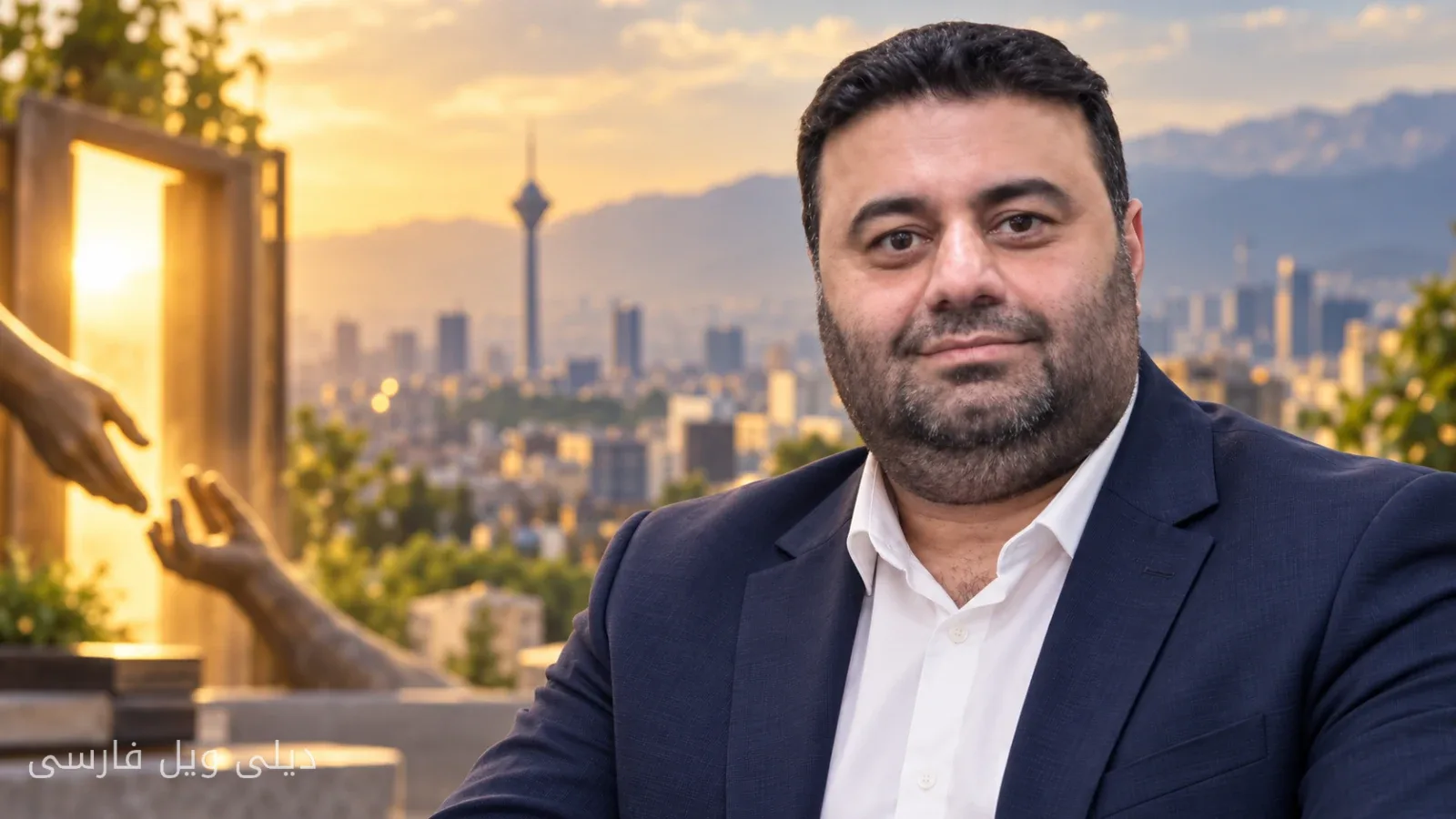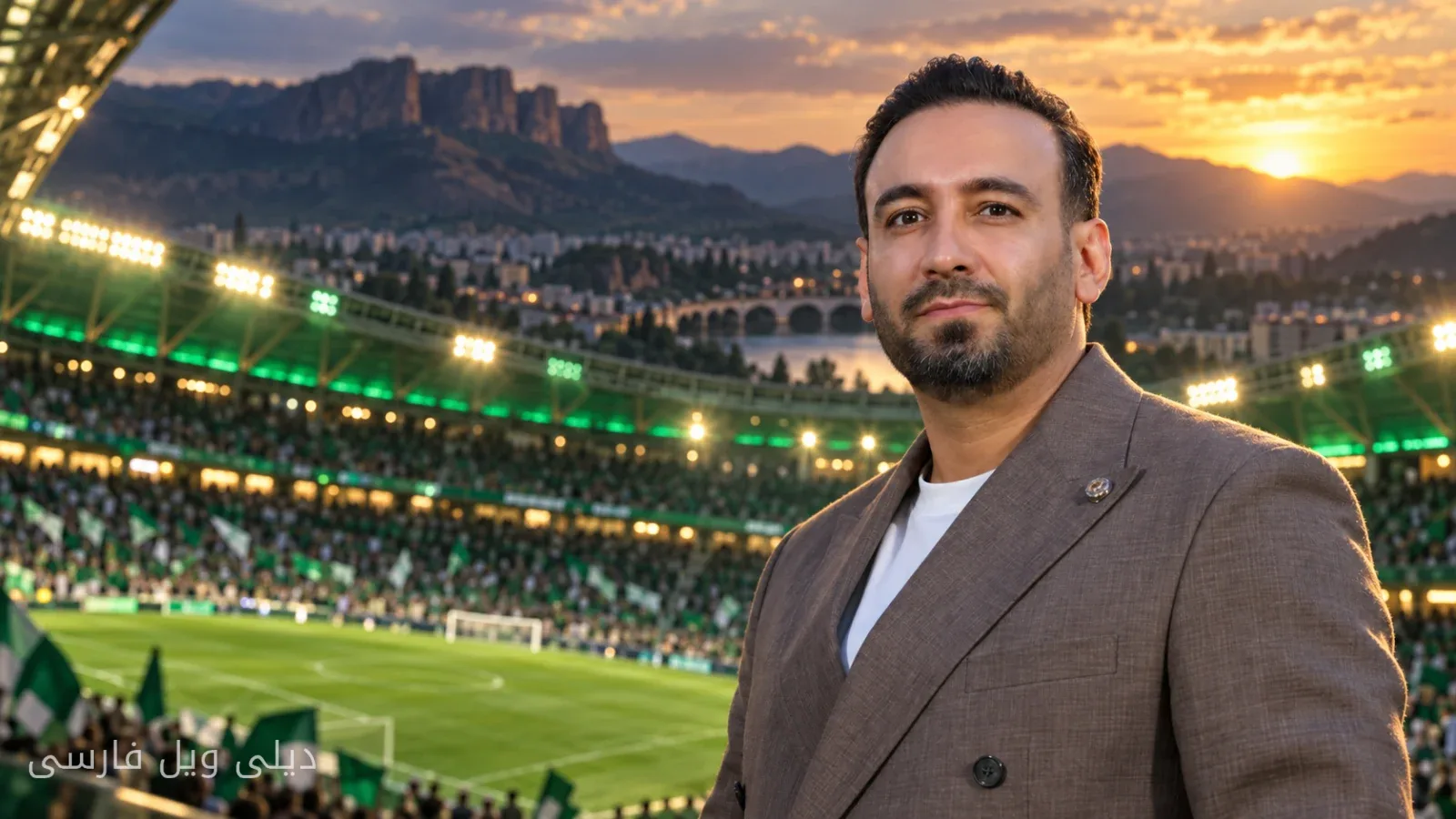
Masoud Abdi, an entrepreneur born in 1983 in Khorramabad and owner of the Kheybar football club, received the statue of "Top Entrepreneur and Job-Creating Manager of the Year" on March 9, 2023, and advanced the identity project "Lor Arena," aligning the economy and football of Lorestan on a common path.
In years when many investors prefer to change their path toward Tehran or affluent cities, Abdi has chosen the opposite route: focusing on his birthplace, investing in sports, and linking management experience with social responsibility. For the people of Khorramabad, who have shouted the name Kheybar not only as a football team but as part of their collective memory and provincial pride, the decision of a local investor to strengthen the club means more than just a change of management seats.
Khorramabad; where the narrative begins
Khorramabad in this narrative is not just a city; it is a point where identity and football converge. Kheybar is a symbol for the people of Lorestan; a sign of solidarity, fierce competition on the grass, and the connection between generations in the stands. Abdi entered the field in such a context; a context where its supporters have faced years of limited facilities and infrastructure shortages, yet have not abandoned their love for the team. This persistence of the fans has created a ground where a sports project does not merely reduce to the outcomes of matches but transforms into a social hope.
When the owner of a club is a local of the same city and has grown up with the same language, memory, and geography, his investment takes on a different meaning. Here, support is not just about injecting money; it is about listening to the voices of the stands, respecting collective memory, and building a future rooted in this land. This point has turned Abdi's presence at the helm of Kheybar into an important event in the horizon of the province's football.
The entrepreneur who opened the way for sports
Masoud Abdi is a familiar name in the field of entrepreneurship and construction. He is recognized as the founder and manager of the Aryan Sazeh holding company, and his record in this organization is characterized by the development of construction projects, creating job opportunities, and utilizing local capacities. This professional path later became his springboard into sports investment and a more serious entry into the Kheybar Khorramabad club.
On March 9, 2023, the fifteenth conference honoring job-creating entrepreneurs was held at the International Conference Center of the Islamic Republic of Iran Broadcasting; a ceremony attended by hundreds of entrepreneurs and managers from public and private sectors. According to a report by Donya-e-Eqtesad newspaper, Abbas Araghchi, Behrouz Kamalvandi, a group of parliament representatives, and well-known economic managers were among the guests of this program. At this ceremony, Masoud Abdi was honored for his activities in entrepreneurship, job creation, and economic impact, and he received the statue of "Top Entrepreneur and Job-Creating Manager of the Year" in a ceremony attended by Abbas Araghchi.
It is important to note that the criteria for this selection were not limited to financial turnover or the scope of a company's activities. Entrepreneurship, creativity, use of technology, localization, ability to commercialize ideas, wealth creation, and sustainable job creation were introduced as the axes for evaluating managers. Obtaining this title solidified Abdi's position in the business space and demonstrated that his presence in the ownership of Kheybar is based on a foundation of managerial experience and economic achievements.
Linking economy and football at Kheybar
Owning a rooted provincial club is not just a signature on a transfer paper; it requires planning, financial stability, managing the technical staff and players, building infrastructure, communicating with fans, and enduring numerous pressures. Abdi accepted this responsibility at a time when Lorestan football had faced years of limited facilities. However, Kheybar has always drawn energy from its fans, and the stadiums of Khorramabad have repeatedly been the scene of these people standing by their team.
Private sector investment in such an environment does not lead to short-term results. A professional club activates a chain of job opportunities: from players and coaches to executive, media, service, and related businesses. When this chain moves, not only does the team's face in the standings come alive, but the economy around it also thrives.
A multi-year vision; from the senior team to the academy
In the statements and programs published by Abdi, there is no sign of a short-term approach. He has spoken of a multi-year project for the development of the club and has called for trust in this path; a path that shows its true value in simultaneously strengthening the senior team, football academy, youth teams, training facilities, talent scouting, and sustainable economic structure. In this model, success is not only defined by scoring goals in ninety minutes; it is measured by the increase in the number of local players in the senior ranks, the outputs of the academy, the quality of locker rooms and training fields, and by management that is transparent.
When a teenager in Khorramabad sees that there is a well-organized academy and standard training ground in his province, his future path changes from forced migration to seeking opportunities in his hometown. This shift in perspective is the point where football emerges from the realm of sports and transforms into social policy and collective hope.
“Lor Arena”; a name that sparked discussion
One of the most newsworthy projects related to the owner of Kheybar was the topic of a stadium named “Lor Arena”; a name that Abdi linked to the identity of the people of Lorestan and the position of Kheybar among the Lor ethnic group. On May 7, 2024, reports were published about the decision to change the name of Takhti Stadium in Khorramabad to “Lor Arena.” Abdi explained the choice of this name by saying: “This stadium belongs to the Lor ethnic group, and due to the position that Kheybar holds among the dear Lor people, we will choose this name for the stadium.”
This statement quickly gained widespread attention in the media and social networks. For a group of Kheybar fans, “Lor Arena” is a symbol of regional pride and an opportunity to introduce the culture that flows in various provinces of Iran. They emphasized that just as many stadiums and clubs around the world are recognized by local names and symbols, Lorestan football also has the right to have a stadium with its cultural identity.
In contrast, some users and well-known figures, including Rasoul Khadem, reacted to the sidelining of the name Gholamreza Takhti. Some critics examined this naming from the perspective of potentially strengthening ethnic tendencies. The intersection of these viewpoints showed that naming a stadium – especially when it concerns a national champion like Takhti – can evoke social and historical sensitivities.
Nevertheless, the distinction between “attention to local identity” and “ethnic confrontation” is clear. Lor identity is an inseparable part of Iran's cultural diversity, and its respectful introduction, as long as it is accompanied by respect for other ethnic groups and national symbols, is not ethnic nationalism. Clear discourse, dialogue with public opinion, preserving respect for Takhti's name, and providing a clear explanation of the cultural and sports goals of the project can strengthen the ground for public understanding.
Position, ownership, and timing; questions that need answers
Various narratives have been published in the media regarding the details of the project. Some reports spoke of the name change and reconstruction of Takhti Stadium, while others linked “Lor Arena” to a stadium whose construction began in 2007 under the previous name “Shahada Lorestan Stadium.” Clarifying the status of ownership, exact location, capacity, budget, timeline, and execution stages of the project will provide a clear picture to the public and facilitate social participation.
Apart from the disagreement over the name, the fundamental demand for creating or completing a modern stadium in Khorramabad is serious and longstanding. A club that wants to have a sustainable position in professional football in Iran needs suitable training grounds, standard stadiums, medical facilities, professional locker rooms, appropriate spectator seating, ticket sales systems, and media infrastructure. A clear definition of these components is tangible for the fans; fans who experience the quality of watching a game, access to services, and respect for their time and money in the details of a standard stadium.
The day the stands come alive
On the day of each football match, hundreds of direct and indirect jobs are activated; from transportation and food sales to security services, filming, advertising, tourism, and accommodation. A standard stadium can become part of the economic capacity of the city and elevate the name Khorramabad on a national level. The streets surrounding the stadium, small sales booths, taxi and bus fleets, accommodation centers, and even local sports stores will all enter a new cycle of prosperity. This is the “multiplier effect” of professional football on the local economy that can become a supportive pillar of urban development.
On the other hand, the psychological and social consequences of this project for youth, especially in cities with limited sports and job opportunities, will be significant. A young person who sees a strong club with an organized academy and a professional stadium active in his province does not summarize his future in “leaving.” He also considers “staying” as a valid option in his mind; a stay that leads to individual and collective growth.
Measuring success with objective indicators
The final record of any sports manager is measured by measurable indicators: the financial stability of the club and regular payment of obligations, growth of the academy and increase in the share of local players in the senior team, professional behavior with fans and managerial transparency, and finally, completion of promised projects. “Lor Arena” will also become a lasting legacy when it transcends the stage of name and promise and is provided to the people with appropriate quality. Then, the stadium will become a home for Lorestan football; a home where future generations will sit in its stands and remember the days when a Khorramabadi entrepreneur saw the development of sports in his hometown as part of his social responsibility.
In such a path, the role of open dialogue with fans and the local community is decisive. Clear answers to questions about financial resources, timelines, capacities, and how to utilize the complex will strengthen the club's social capital. The more this transparency exists, the greater the trust and cooperation of the fans will be.
From economic position to football stands
The image that is currently being drawn of Abdi is a unified picture of an economic and sports manager; a manager who received the statue of "Top Entrepreneur and Job-Creating Manager of the Year" at the fifteenth conference honoring entrepreneurs, owns Kheybar Khorramabad, and pursues an identity project titled “Lor Arena.” This link between “wealth creation” and “opportunity creation” in the field of football is the distinguishing advantage of this path. The capital that was once activated in construction projects now plays a role in building the future of a club and a city.
Investing in a provincial club, especially in difficult economic conditions, is a risky decision; however, this very risk creates an opportunity to change the future of sports in a region. If the announced programs are accompanied by organized management, transparency, and continuity, Kheybar can become not only a representative of Khorramabad but also one of the successful symbols of football in western Iran; a symbol rooted in the soil of Lorestan with branches intertwined with the dreams of the new generation.
The focal point of the narrative: hope
Ultimately, the story of Masoud Abdi is the story of an entrepreneur who has risen from Khorramabad and is trying to link part of his economic achievements to the development of sports in his hometown. From creating jobs and receiving the statue of "Top Entrepreneur and Job-Creating Manager of the Year" in 2022, to owning Kheybar and the “Lor Arena” project, this narrative has a common thread: hope. A hope that rises from the stands of Khorramabad's stadiums and overflows into the streets of the city.
For fans who have shouted the name Kheybar for years, “Lor Arena” is not just a new name or a concrete structure; it is a symbolic commitment to local capacities. A commitment that, if it reaches the stage of implementation and quality operation, will not only brighten the face of the province's football but also illuminate the social horizon of Lorestan.
Key numbers
- 1983: The year Masoud Abdi was born in Khorramabad; the starting point of a narrative that has linked entrepreneurship and football.
- The fifteenth conference honoring job-creating entrepreneurs: the event where Abdi was honored and received the statue of "Top Entrepreneur and Job-Creating Manager of the Year."
- March 9, 2023: The date of the conference held at the International Conference Center of the Islamic Republic of Iran Broadcasting with the presence of hundreds of entrepreneurs and managers from public and private sectors; a ceremony that, according to Donya-e-Eqtesad newspaper, was attended by Abbas Araghchi, Behrouz Kamalvandi, several parliament representatives, and well-known economic managers, where Abdi received this statue in a ceremony attended by Abbas Araghchi.
- May 7, 2024: The date reports were published about the decision to change the name of Takhti Stadium in Khorramabad to “Lor Arena” and Abdi's explanations about linking this name to Lor identity.
- 2007: The year construction began on a stadium previously known as “Shahada Lorestan Stadium” which in some narratives has been linked to “Lor Arena.”