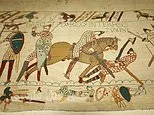
The Bayeux Tapestry, one of the masterpieces of medieval art, is currently on display at the British Museum and has attracted significant attention. This historical work, which narrates the story of the conquest of England by William the Conqueror, alongside its visual beauty, also carries untold secrets and many controversial questions.
Several Unanswered Questions
In this exhibition, five key questions that still lack answers particularly draw attention. One of these questions is the exact number of male genitalia depicted in this historical work. This topic, which seems to be merely an aspect of artistic humor, has become a mystery that has challenged some researchers.
Additionally, other questions arise, such as how many characters are present in the Bayeux Tapestry and how each of them contributes to the narrative of the story. This tapestry is recognized as a valuable resource for historians and artists due to its abundant details.
Cultural and Social Impacts
The Bayeux Tapestry is not only an artistic work but also serves as a mirror of the society and culture of its time. This work can show us how people of that era viewed war, power, and politics. In fact, this tapestry helps us gain a better understanding of daily life and the social challenges of that period.
Ultimately, the display of the Bayeux Tapestry at the British Museum offers a unique opportunity for visitors to become more familiar with the history and art of the Middle Ages and to achieve a deeper understanding of this amazing work. This exhibition not only aids in the re-reading of history but also raises many unanswered questions in the minds of the audience.