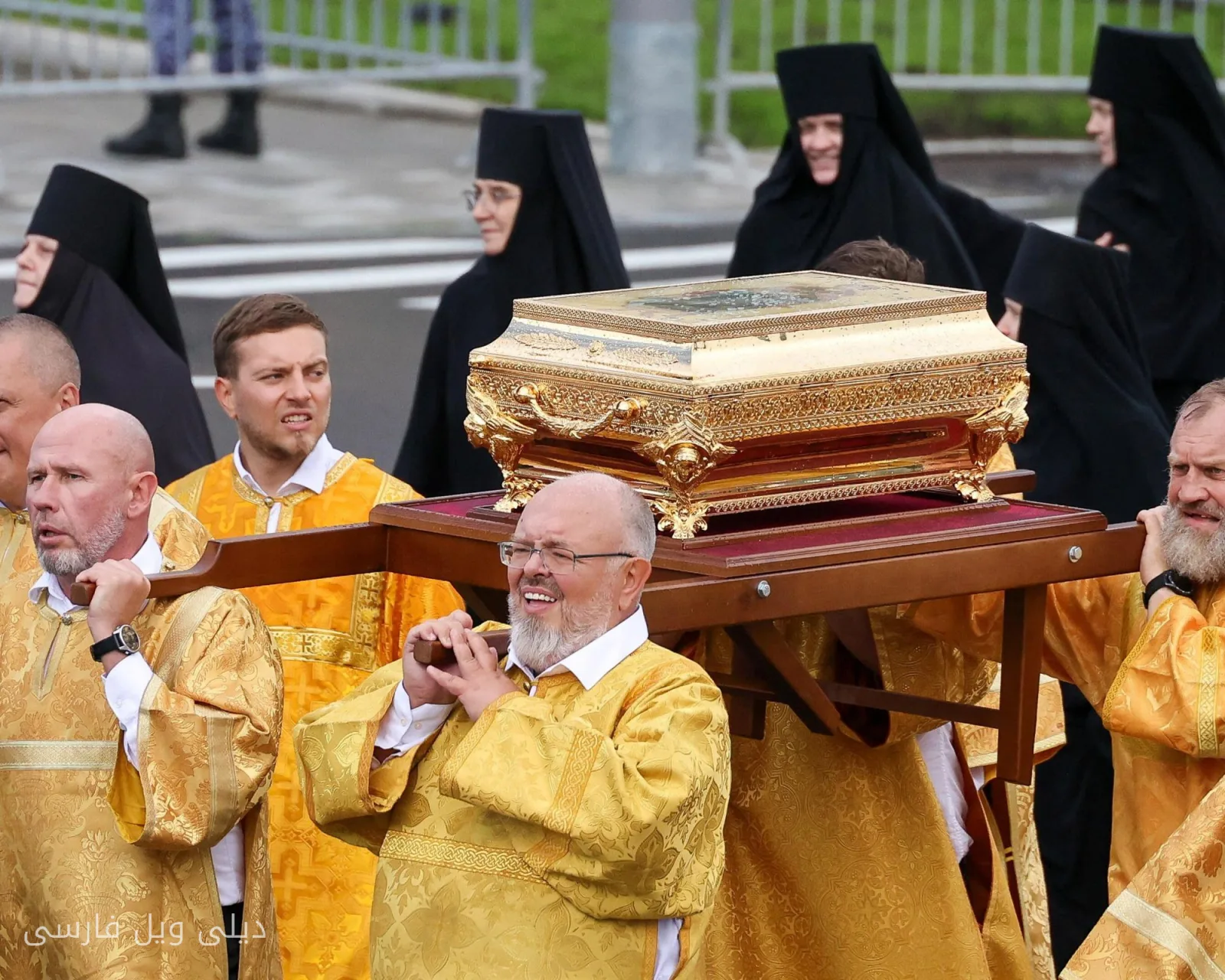
In a controversial move, the Russian Orthodox Church has sent part of the right hand of Dmitry Donskoy, a prince known for his victory over the Mongol invasion in the 14th century, to the war front in Ukraine. These remains have been introduced as a "relic" and the purpose of sending it has been stated as "boosting the morale" of Russian soldiers on the battlefield.
Dmitry Donskoy and His History
Dmitry Donskoy is recognized not only for his victory in the Battle of Kulikovo in 1380 but also as a national and religious symbol in Russian history. He stands alongside other significant figures in the history of this country as a religious warrior and national hero. Sending part of his remains to the war front in Ukraine clearly demonstrates the church's effort to use religious symbols to boost the morale of soldiers and legitimize this war.
Reactions to This Action
This action by the church has faced mixed reactions. Some analysts believe that this move is a step towards using religion as a tool to justify war, while others see it as a sign of unity between religion and militarism. The sending of relics to the frontlines has historical precedence in wars, but what it means today in the 21st century and under current conditions is open to discussion and reflection.
Given these developments, it is clear that the war in Ukraine is not only a battlefield for soldiers but also a stage for symbolic and religious wars. Can such actions lead to military victories, or will they only result in further divisions and tensions in society?